Tag Archive | Exploring Colorado

Cheyenne Mountain Zoo

Colorado Springs, CO

073

My family and I just returned from a trip to Colorado and a visit to the Cheyenne Mountain Zoo. The zoo was absolutely spectacular!

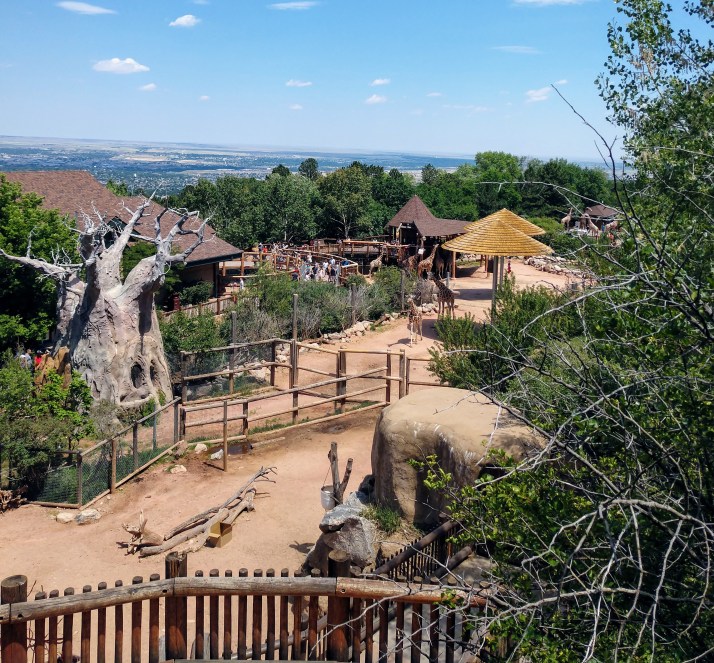
This zoo is located 6,800 ft. above sea level and is built on the side of a forested mountain with breathtaking views. It was founded in 1926 and is the highest zoo in the nation. It has recently been voted the 4th best zoo in the United States.  There are 15 main exhibits that cover over 140 acres and house over 170 different species of animals.  Each exhibit “mirrors” natural habitats in the wild and makes you feel like you are transported around the globe. 

IMG_20180708_142323897

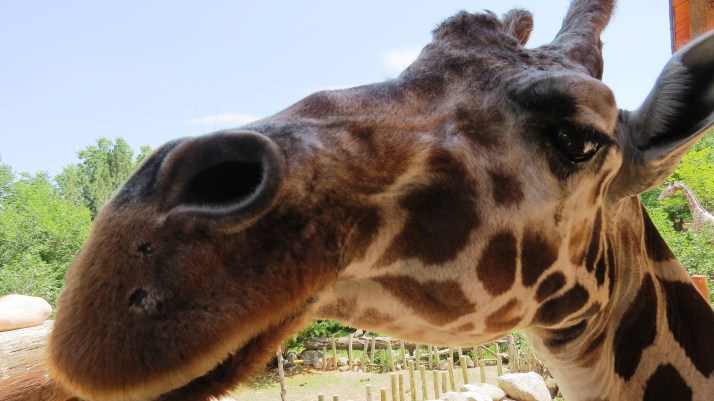
One of the first areas after you enter the gates will be Encounter Africa. This award-winning exhibit puts you face-to-face with a dozen or so reticulated giraffes. These gentle, long-necked animals are eye-level and you can hand-feed them zoo-provided lettuce ($2-$5 purchase). Beware the long, slimy tongues but try to enjoy all the surprised looks when lettuce-feeders are freaked out! The Cheyenne Mountain Zoo has the largest giraffe herd of any zoo in the country (16 of them!) due in part to their prolific breeding program (200 births in 6 years). This was an unforgettable experience for everyone in my family.

There are a number of other animal feedings that are offered throughout the park. We happened upon the elephant feeding ($15 for an apple and carrot).  This a once-in-a-lifetime experience and great photo op! We also fed seed-encrusted, peanut butter sticks to rooms full of parakeets in the Budgie Buddies exhibit. There was another feeding exhibition we happened upon in the Rocky Mountain Wild area. A zoo attendant was illustrating what one specific grizzly bear preferred to eat (she liked meat, watermelon, and peanut butter but did not like cucumber!). These bears were HUGE and frightening! We watched as this one female bear swatted away undesirable food offered by the attendant while the other grizzly swam, ran around, and scratched itself on a dead tree.  They were pretty entertaining….but still scary as hell! 

The one experience that my family will not soon forget was our animal encounter at the Australian Walkabout. This habitat houses emus and a tree kangaroo and is located on the uppermost part of the zoo. This is a fairly steep, though gradual, walk (beware calf muscles!). The main section is a grassy, gated-off area where adult and baby wallabies hop all around you. They recline, bask in the sun, dig in the grass, take baths, sit next to you, and jump all around with no fear whatsoever. Being up close and personal with wallabies is not something I get to do everyday in Texas! We loved this!!

I was also quite impressed with the Reptile House. I have never seen such artistic and beautiful reptile enclosures – backdrops, shiny tiles, glass sculptures, etc. It was most unusual and very interesting. A few of my other highlights included seeing a baby meerkat and wallaby, taking a selfie with a giraffe, getting up close to a moose and grizzly, and stopping every now and then to catch the gorgeous views of Colorado Springs below us. It was prefect weather and made for a great day!

There is so much more to write about this zoo, but I was just impressed by how extensive the park was and how well it is constructed. I honestly do not like even calling this a “zoo” since it doesn’t have that feel to it. It is rather compact, easy to navigate, and feels more like a wildlife sanctuary.  All the animals appear to be healthy and happy – though I certainly can’t speak for them. There are none of the small, concrete enclosures with distressed, pacing animals that have always bothered me and given many zoos a bad name. The Cheyenne Mountain Zoo seems to give people a real sense of a natural habitat and doesn’t simply enclose the animals in cages for viewing. My family was impressed.

I hope that you get to visit Cheyenne Mountain Zoo in the future. If you get the opportunity, I suggest you wear comfy shoes, take water and apply plenty of sunscreen. You will be glad you did!

091

The Cheyenne Mountain Zoo is a non-profit and does not receive any local or public tax support. They participate in more than 30 Cooperative Species Survival Programs. The zoo is open 365 days a year.

Chautauqua

Boulder, Colorado

021

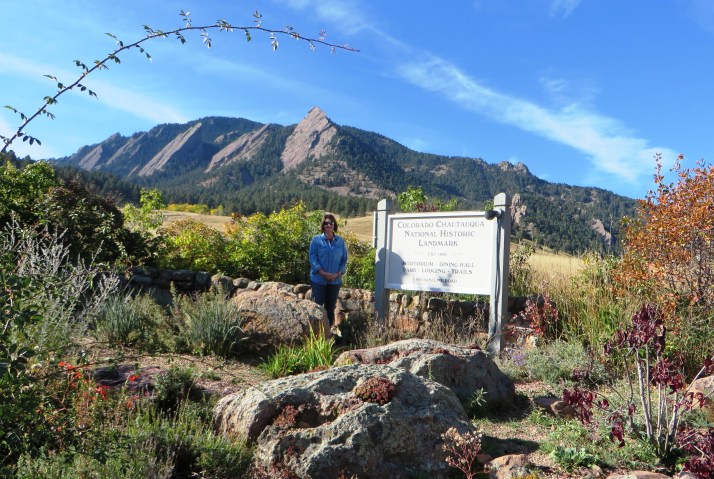
Chautauqua National Historic Landmark sign at the park entrance

If you are ever lucky enough to find yourself near Boulder, Colorado with some free time, make your way to Chautauqua National Historic Landmark. Located in the shadows of the Flatirons on the southwest side of Boulder, you will find picturesque views, hiking trails, a dining hall, and over 60 lodges or accommodations for overnight stays.

This is a favorite place for locals and visitors alike. There is a Visitor’s Center at the park’s trail head where you can learn about the plants and animals in the area and also pick up a map showing the 151 miles of trails. There seems to be a trail for every level of hiker. Most of the trails start out on the large meadow in front of the Visitor’s Center and go up into the Flatirons. You can hike for 30 minutes or all day. Some trails meander along the base of the mountains through dense forests. Other trails have moderate to steep inclines and wind up well into the Flatirons for breathtaking views. Trail markers are visible all along the way. According to the season, you may see many types of flowers, flowering trees, tall pines, boulders, streams, cacti, birds, chipmunks, deer, and sometimes – black bears.

Chautauqua is where the locals go for their daily exercise. While many “flat-landers” like myself have to stop every few yards to catch their breath in the higher altitudes, locals come running by or hurriedly walk past with one baby strapped on their front and a toddler on their shoulders – moseying along like it takes no effort whatsoever. Really?! Embarrassment on the trail is when a couple, likely to be in their eighties, scamper by at a quick pace and smile at you as you sit on a boulder gasping for air. I do admit, as hard as some of the hikes have been – it has ALWAYS been worth it!

Another thing I love about Colorado and Chautauqua in particular – it is a dog’s paradise. All the trails are dog-friendly and you see all shapes and sizes of canines. All the dogs seem to be smiling, have pep in their steps, and are loving every minute of their life!  We actually parked by a “doggie van” last time we were there that picks up dogs at their homes and then takes the dogs for hikes or runs at Chautauqua. What a great idea for “doggie day out!” This could easily be my dream job….if I was in a little better shape.
Not only humans and canines enjoy hiking up Chautauqua. On one visit, I actually saw a guy coming down from the Flatirons with a big ole yellow tabby cat riding on his shoulders. Yep, it is the truth….only in Colorado.

We have been to Chautauqua during all seasons. In summer, you need to get an early start before the sun beats down on you. In the spring, the wildflowers are glorious and the trees and grass are all shades of green. In the fall, all the trees turn golden yellow, orange or red and the views of Boulder from the mountain are a burst of colors. In the winter, the snow turns the Flatirons into a silent, winter wonderland (and people are still hiking!).

Chautauqua actually became a place of refuge for me several years ago. My son, a CU college student, had spinal surgery and I lived with him in Boulder for several weeks following his surgery. When he was well enough to return to classes, I would drop him off at campus and head directly to Chautauqua. Most times I hiked short distances- other times I sat on rocks and reflected, prayed, read books, or just enjoyed the solace. It became my calming getaway and will always hold a special place in my heart.

I recently came across a travel magazine article on Chautauqua that explained in detail the history of this wonderful place. It seems there is a very strong Texas – Colorado connection. Who knew? In Austin, Texas in 1897 the Texas-Colorado Chautauqua Association began. Its purpose was to conduct a summer school for Texas school teachers. Boulder, Colorado was chosen for the location due to the cooler summer temperatures. A $75 fee covered the 6-week session for each teacher. The tuition included room and board, lectures, entertainment, and round-trip rail fare from anywhere within a 100-mile radius of Ft. Worth. The “continuing ed” for these early teachers included cello, guitar, mandolin, piano, vocals, math, chemistry, botany, physics, psychology, education, English, Latin, Greek, French, German and English Literature. When not in class, the participants enjoyed symphonies, motion pictures, burro rides, horseback rides, hikes, and stagecoach rides. This association was very active for over 30 years before the attendance began to decline. If you go on the property today, you see many of the original buildings from this era. The Dining Hall has many old photos depicting some of the summer sessions – very interesting for history buffs.

For those of you who are wondering, “Chautauqua” is an Iroquois word with a few meanings— “a bag tied in the middle” or “two moccasins tied together,” and describes the shape of Chautauqua Lake, located in southwest New York. This area was the setting for the first educational assembly (Chautauqua Institution) and provided the name for the movement.

I hope you get the chance to visit Chautauqua one day and enjoy it as much as my family does. Go early, dress comfortably, and take plenty of water to drink along the way. Enjoy your hike and then afterwards, have a meal at the Chautauqua Dining Hall. Ask to sit out on the veranda and have a great meal while overlooking the park.  Order the “Rachelette” and tell them Southern Savvy sent you!

Garden of the Gods

Colorado Springs, CO

Garden of the Gods is a National Natural Landmark located in Colorado Springs, Colorado. This is a great place to spend part of a day or a full day. You can choose to hike, go rock climbing, bike, ride horseback, or take a leisurely drive (like we did). There are 15 miles of well-marked trails (22 total) throughout the park.

We began at the Visitor & Nature Center and Museum at the park’s entrance. This is a wonderful building with geology, ecology, and cultural history exhibits. (Be sure to read about the 125 million-year-old, one-of-a-kind dinosaur fossil found here in 1886.) There are many hands-on exhibits and activities for adults and children. The visitor’s center also houses a gift shop, restrooms, a cafe, theater, and an information desk where you can pick up a free full-color trail map of the park. Step out of the center onto the observation deck for spectacular views of Garden of the Gods. This is the perfect spot to take a photo of the dramatic 300′ towering sandstone formations with the foothills of the Rockies and Pike’s Peak in the distance.  What a backdrop!

When you leave the visitor’s center, the entrance to the park is across the highway. There is not an entrance fee – the park is free. 

All the roads, trails and parking areas are well-marked and easy to find. Each turn seems to bring a different, amazing sight. All these rock formations were created by a geological upheaval 300 million years ago. The bright red, pink, gray and white rocks are various shapes and sizes – all motionless and silent. Many were tilted vertically and formed into “fin-like” spikes. Others have been toppled, slanted, pushed around, overturned and eroded.  Most of the rocks are sandstone, limestone or conglomerate and each one is a true masterpiece of Mother Nature.

As the road winds through the park, you can stop for photo ops and explore “Balanced Rock,” located right next to “Steamboat Rock.” Cathedral Valley houses the “Three Graces,” “Gray Rock,” “Sleeping Giant,” and “Kissing Camels” to name a few. There are plenty of pull-offs and parking areas throughout the park. We actually stopped at one trail head and hiked a short distance before having lunch at one of the many picnic areas. There are many trails for easy hikes if you want to check out all the natural flora and fauna. There are also more difficult trails for the athletically inclined people who want to do some actual rock climbing. 

We chose to drive the park on our own this particular day. If interested, there are several other options for exploring the park: private car tours, bikes, jeeps, segways, ATV’s, luxury buses, or horseback. The Park Program also offers 45-minute Nature Walks and Nature Talks daily through the Visitor’s Center. Your call!

We truly had a wonderful day here and I will always remember the sight of those gigantic rock formations. The colors, shapes, and prehistoric-looking landscape will be difficult to forget. It reminds me of how powerful this earth can be, how old this planet actually is, and how land is constantly changing. I sincerely hope you have the opportunity to visit Garden of the Gods.


Please feel free to leave any comments! I hope you have enjoyed reading about my trip to Garden of the Gods. If you would like to read more about my dining or travel experiences, please subscribe to this blog. Thank you!